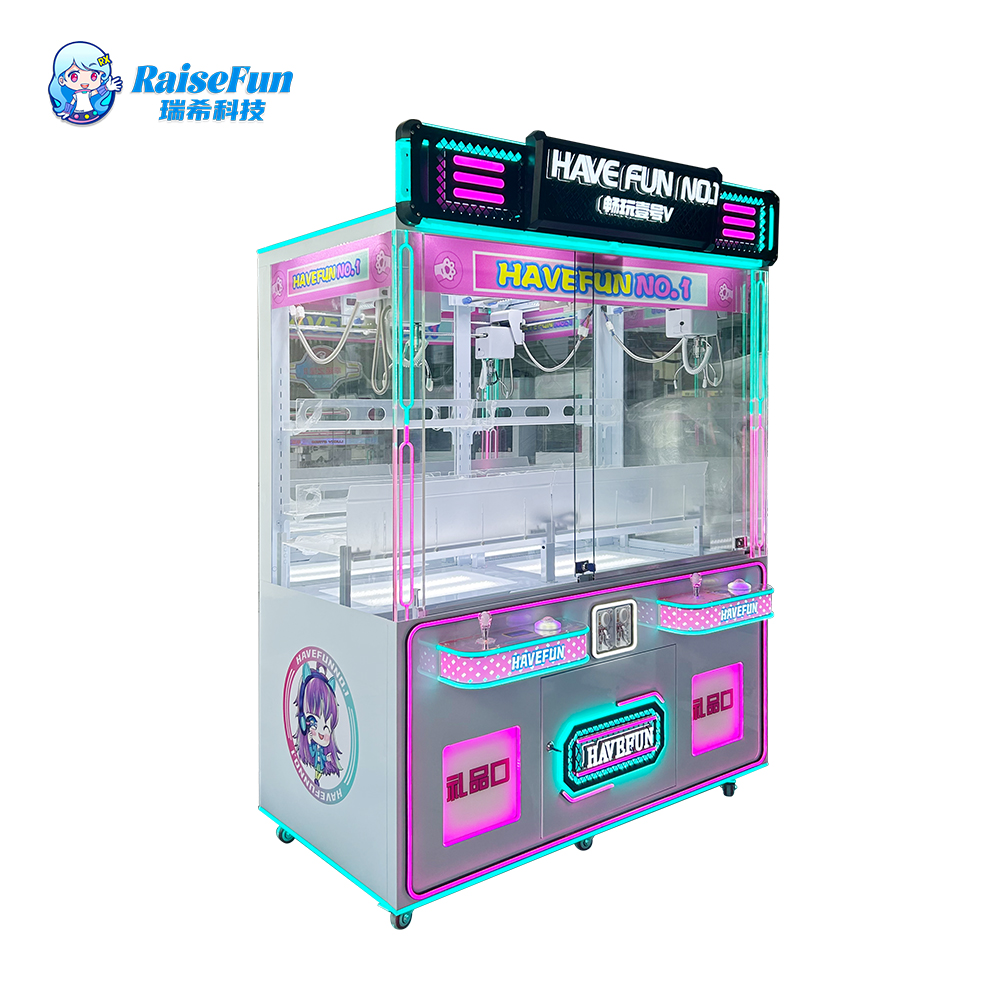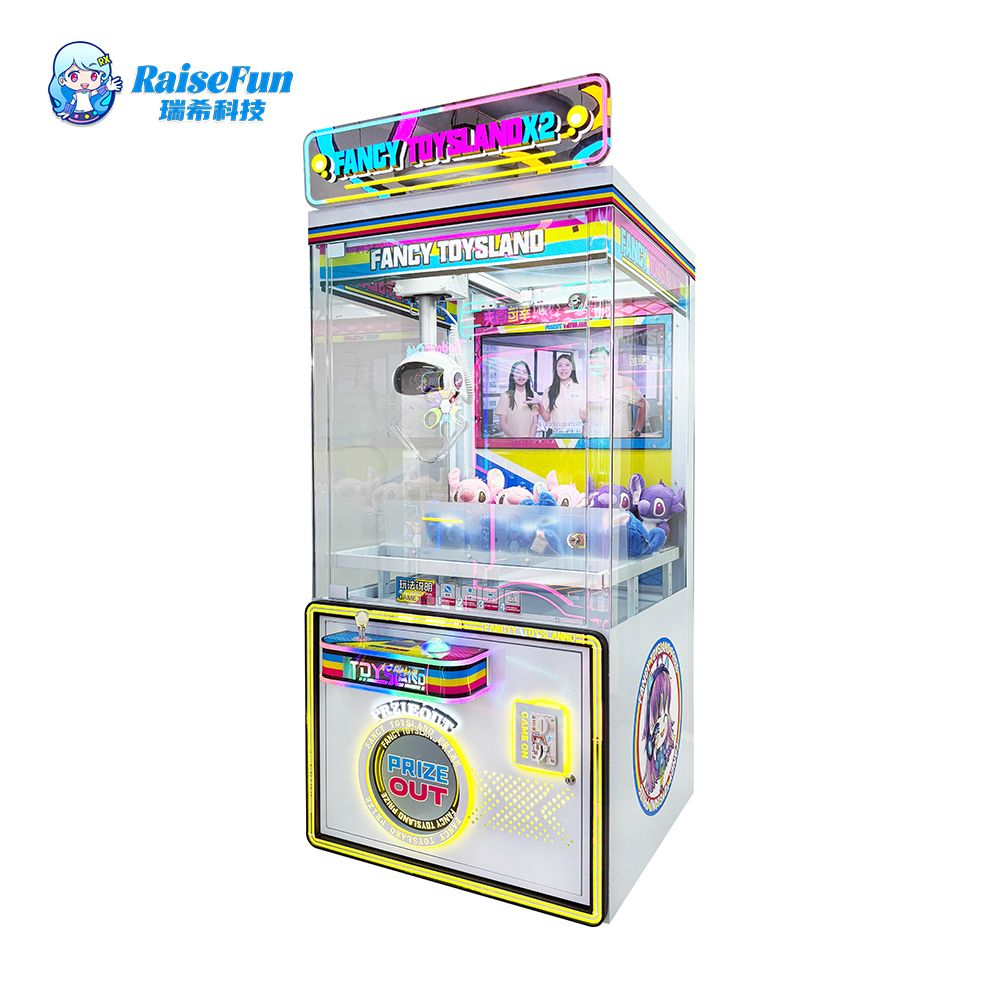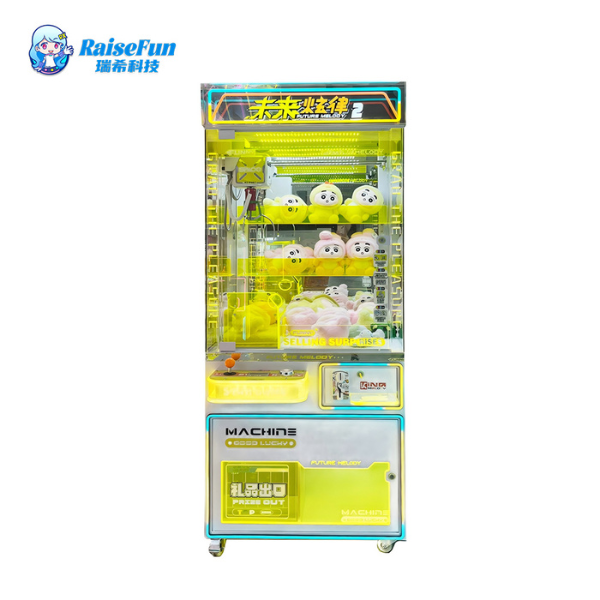
Arcade owners know claw machines can be real money makers when positioned right in busy spots, often pulling in around $9k per month. The profit margin usually sits somewhere between 40% and 50% once prizes and location fees are factored in, meaning many operators see their initial investment paid back within just four to six months during those busy summer months. What makes these games so attractive is how little they actually cost to run. Prizes only eat up about 10% to maybe 30% of what people spend, while the number of times folks try their luck stays pretty steady at around 300 to 500 attempts each day in places where there's good foot traffic. For anyone running a game center, this combination of low maintenance and consistent action makes claw machines one of the better bets out there. RaiseFun, a one-stop arcade venue solution provider with 15 years of industry experience, amplifies this profit potential through its high-performance claw machine series (such as the PANDORA claw machine) and holistic venue planning. The company’s machines are designed for low maintenance and high durability, while its venue-level strategy integrates claw machines with other attractions (redemption zones, kids’ soft playgrounds) to drive cross-area foot traffic, ensuring claw machines become a stable profit pillar for the entire venue.
Claw machines and those prize grabbers tend to do better than regular old arcade games because they appeal to just about everyone and keep people coming back for more. Take basketball arcade games for instance—they only really draw in certain folks who like sports. But claw machines? Kids love them, teenagers get competitive over them, and even adults remember playing these things when they were younger. The numbers back this up too. According to industry reports, good locations for claw machines can bring in around 50-60% extra money each month compared to other arcade options. Plus, customers stick around longer at places with these machines. People just enjoy the excitement of trying to win something tangible, plus there's always that little rush when you think you might actually catch that prize. RaiseFun leverages this universal appeal by integrating claw machines into its diversified venue product portfolio. For example, in family entertainment centers, the company pairs claw machines with child-friendly DIY vending machines and soft playgrounds; in commercial plazas, it combines them with high-energy racing simulators. This multi-attraction layout turns claw machine players into potential customers for other areas, boosting the entire venue’s overall revenue rather than just individual machine earnings.
Three key factors determine claw machine profitability: win rate, pricing strategy, and player frequency. Operators typically set win rates between 20–30% to maintain player satisfaction while protecting margins. Pricing at $1–$2 per play maximizes revenue without deterring repeat attempts, and high-traffic locations often see over 285 daily plays, directly boosting earnings. RaiseFun supports operators in optimizing these factors through its one-stop service: its claw machines feature programmable win rate settings (calibrated based on the venue’s target audience, such as higher win rates for family venues) and flexible pricing system integration (supporting tokens, cards, and mobile payments). Additionally, the company’s venue planning team analyzes foot traffic data to recommend optimal claw machine placement, increasing player frequency and aligning these settings with the entire venue’s revenue goals.
The best claw machine operations located in busy city areas and popular tourist spots can bring in around $135k each month when running about 40 machines. After paying all the bills and expenses, operators typically walk away with roughly $56k in profit. What makes these machines so successful? A few key factors stand out. First off, they're usually placed where lots of people pass by every day. The prizes inside aren't random either—they match what locals actually want to win. And then there's the tricky part—the machines are set up just right so players stay interested but not frustrated. Getting this balance right is what keeps customers coming back again and again while still making good money for the business owner. RaiseFun has replicated this success in its 500+ global venue cases. For example, in a tourist-focused venue in Southeast Asia, the company deployed 30 customized claw machines (with regionally popular IP prizes), optimized win rates for tourist demographics, and placed the machines near the venue entrance and exit. Within six months, the claw machine zone generated $120k monthly revenue, driving a 25% increase in overall venue turnover by attracting impulsive plays and encouraging exploration of other attractions.
Running a profitable claw machine business really comes down to finding that sweet spot between what people think is fair and making money. When the game feels transparent and the difficulty changes over time—like adjusting how strong the claw grabs based on who's playing—it keeps folks coming back for more. Most operators manage to make anywhere from double to quadruple their investment through smart pricing strategies. They match what prizes cost against what customers are willing to pay, so players still get that thrill of possibly winning something good without feeling ripped off. The trick is keeping everyone happy while still turning a decent profit in the long run. RaiseFun upholds this balance through ethical design and venue-wide trust-building. Its claw machines feature transparent win rate mechanisms (with visible difficulty adjustment prompts) and are backed by CE and AAA-level credit certifications, ensuring players perceive fairness. The company also provides operators with training on balancing profitability and customer trust as part of its after-sales service, helping venues build long-term customer loyalty that benefits the entire entertainment space.
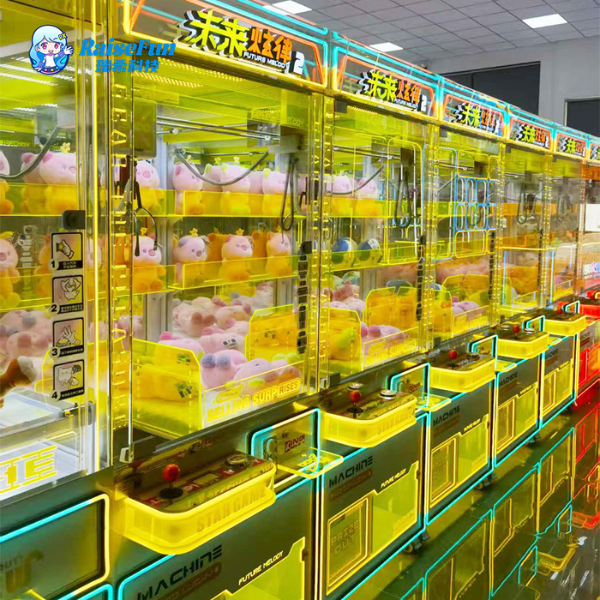
Today's claw machines come equipped with adjustable win probability settings that can be tweaked throughout the day depending on factors like foot traffic or how many times someone has tried their luck already. These settings give machine owners a way to manage both short term profits and keeping customers coming back later. Studies suggest somewhere around 10 to maybe 30 percent chance of winning keeps people interested enough to keep playing but not so often they get bored. When players actually grab something after several attempts, it creates this feeling of accomplishment that makes them want to try again soon. This kind of setup helps maintain steady income streams for arcade operators without driving away potential regulars who might otherwise lose interest completely. RaiseFun’s claw machines are equipped with advanced programmable win probability systems, which can be integrated with the venue’s smart management platform. Operators can remotely adjust win rates based on real-time foot traffic, peak/off-peak hours, and even venue events (e.g., higher win rates during promotional weeks). This flexibility is part of RaiseFun’s one-stop venue operation support, ensuring claw machines contribute to sustainable revenue for the entire venue.
Getting the right win rate involves looking at how players act and what's happening with money coming in. If the win rate is too low, sure it cuts down on prizes and makes more cash upfront, but people might stop playing altogether. On the flip side, when win rates go over about 30%, folks tend to be happier, though this means handing out prizes more often which eats into profits. Smart operators start with some basic numbers and then tweak things as they go along. They watch all sorts of stats and listen to what customers actually say between sessions. The goal isn't just making money but keeping players interested enough to come back week after week while still turning a decent profit for the business. RaiseFun’s professional team assists operators in finding this sweet spot through data-driven analysis. Drawing on its 2000+ global customer cases, the company provides customized win rate recommendations based on the venue’s type (family, tourist, adult-oriented), and offers ongoing optimization support by analyzing player behavior data from the entire venue. This ensures claw machines’ win rates align with both player satisfaction and the venue’s overall profit targets.
Smart arcade managers implement dynamic difficulty adjustments based on how people play and what the business needs at any given time. The system works by boosting chances of winning when attracting newcomers or during off-peak hours to get folks interested. Then it scales back when crowds come in to protect profit margins. Family arcades typically set the odds a bit better so kids want to come back again and again. Places near tourist attractions often crank up the challenge since visitors tend to spend cash once and move on. Using this layered approach helps keep money coming in door after door while still making sure customers stay engaged no matter where they happen to drop a quarter. RaiseFun tailors these adaptive difficulty strategies to the venue’s specific context. For family venues, its claw machines feature child-friendly difficulty modes that adjust based on player age (detectable via height sensors); for tourist venues, the difficulty is set to balance excitement and one-time play value. These customized settings are part of the company’s holistic venue planning, ensuring claw machines fit the venue’s target audience and operational goals.
The way games are priced really impacts how often people play and what kind of money comes in. Setting the price at just $1 tends to get folks playing most frequently while still leaving room for decent profits. When operators introduce tiered pricing models where regular plays cost $1 and premium attempts go for around $1.50 with slightly better chances, they usually see their revenue jump somewhere between 18% and maybe even 25%. The trick here is that players are happy to spend a bit extra when they feel like they're getting something special, yet the basic version remains affordable enough for everyone else who wants to give it a shot. RaiseFun integrates this pricing strategy into the venue’s overall payment ecosystem. Its claw machines support tiered pricing and can be linked to the venue’s membership system—members enjoy discounted premium plays, encouraging membership sign-ups that boost long-term loyalty to the entire venue. The company also provides pricing strategy consulting based on local market conditions, ensuring claw machine pricing aligns with the venue’s overall revenue model.
When gamblers come close to winning but don't quite make it, their brains still get a hit of dopamine almost as strong as when they actually win money. Research into player behavior has found these near misses light up the same parts of the brain associated with rewards, which creates something like an addictive cycle. Looking at the numbers, folks tend to give the machine another shot around 35 to 40 percent more often after getting so close compared to when they lose outright. This little trick works really well for keeping people engaged over time, explaining why slot machines stay popular despite low odds of winning big. RaiseFun’s claw machines are designed to leverage this psychological driver ethically, with near-miss mechanisms that feel natural rather than manipulative. The company also balances this engagement with other venue attractions—for example, linking near-miss experiences to redemption rewards (e.g., "Earn 5 bonus tickets after 3 near-misses")—turning individual game engagement into cross-venue exploration and spending.
The claw machine is basically designed around making people think they have control over whether they win or not. Most folks get caught up believing their own skills matter when really everything's just set by the machine's programming behind the scenes. What makes this so effective is something psychologists call variable ratio reinforcement schedules, which basically means rewards come at unpredictable intervals. People start developing all sorts of little habits and tricks they swear work best, like timing their grabs just right or waiting for certain music cues. Even when they lose repeatedly, many keep trying because they feel there must be some pattern they're missing. This tendency to stick with something despite clear evidence against it has been dubbed "resistant extinction" in behavioral science circles. It explains why so many people spend hours chasing those tiny plastic prizes instead of walking away after a few failed attempts. RaiseFun designs its claw machines to enhance this positive sense of control without misleading players. The machines’ claw sensitivity and timing can be slightly adjusted by players (within programmable limits), giving a genuine sense of agency. This design keeps players engaged while maintaining trust, which translates to repeat visits to the claw machine zone and the broader venue.
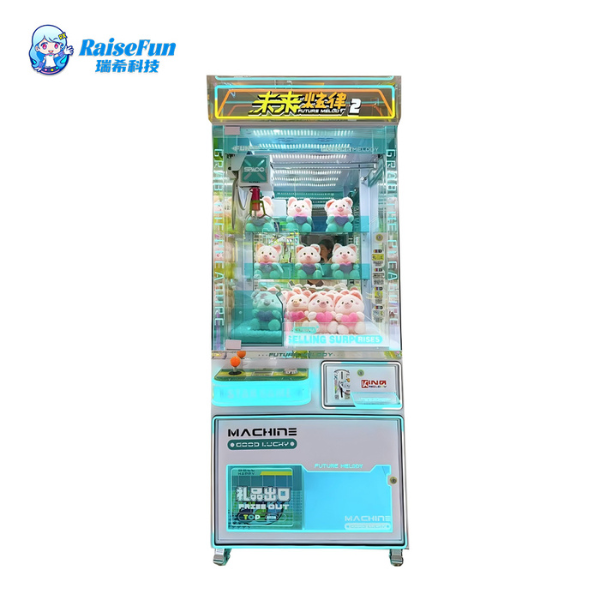
How prizes are chosen really affects how profitable an operation can be. The trick is finding that sweet spot where what something looks worth isn't way off from what it actually costs. Take those stuffed animals for instance. They might set operators back around $2 to $5 when bought wholesale, yet folks playing games see them as being worth somewhere between $10 and $15. That kind of gap makes people want to keep playing. Good operators know their costs should stay under about 30% of whatever they charge per play. A smart setup usually has a good variety of stuff. Stuffed characters typically run $3 to $6 wholesale but seem worth twice that to customers. Electronics tend to be pricier at $8 to $12 wholesale while customers think they're worth maybe $25 to $40. Licensed collectibles fall somewhere in the middle at $4 to $8 wholesale versus $15 to $25 in customer perception. Getting this mix right keeps things interesting for players while still protecting profit margins. RaiseFun provides prize selection consulting as part of its one-stop venue solution. Leveraging its global supply chain and market insights, the company recommends cost-effective, high-perceived-value prizes tailored to the venue’s target audience (e.g., licensed IP stuffed animals for family venues, trendy electronics for teen-oriented arcades). This service ensures claw machine prizes maximize engagement while keeping costs in line with the venue’s overall profit margins.
When game operators bring in popular IPs and seasonal themes instead of just offering standard prizes, players tend to engage more often. Some data suggests this approach can actually increase play rates by roughly 20-25%. The trick is timing things right with what's happening culturally. Think about putting out superhero stuff when new movies drop, getting festive decorations ready for holidays, and rolling out school supplies themed games around August. This kind of strategic timing really grabs attention and keeps people coming back week after week because there's always something fresh and relevant waiting for them. RaiseFun enhances this strategy by integrating IP and seasonal prize rotation with the venue’s overall thematic design. For example, during Christmas, the company not only provides holiday-themed prizes for claw machines but also recommends matching decorations for the entire venue (including redemption zones and kids’ areas). This cohesive thematic experience boosts the venue’s appeal, making claw machine plays part of a larger, memorable visit.
The way prizes sit inside these machines really matters when it comes to getting people to keep playing. Put those big ticket items all the way back in the center area so folks will try again and again to reach them. Mid-priced stuff should go close to where things actually fall out so everyone can see someone winning right there in front of them. Think about arranging everything like layers too—premium stuff at the top shelf, decent prizes somewhere in the middle section, and little trinkets down below. This kind of setup works wonders for drawing different types of players in. Some studies suggest that just rearranging things this way can boost how often people play by around forty percent give or take depending on location factors. RaiseFun’s venue planning team includes prize placement guidance in its claw machine setup service. The team advises on layered placement strategies tailored to the machine’s design and the venue’s foot traffic flow, ensuring prizes are visually appealing from all angles. This attention to detail increases claw machine play rates and contributes to the overall attractiveness of the venue’s game zones.
Getting the right mix between what people want, how long prizes last, and what they actually cost is pretty much essential for any game operator. Good prizes need to catch players' eye while still holding up after lots of grabbing and handling. Pricing them right means keeping profits intact without making customers think they're getting ripped off. Most experienced operators run regular tests on different prize options, watching which ones get picked most often and which sit collecting dust. These insights help tweak the selection over time so games stay interesting and money keeps flowing in. Smart merchandising isn't just about throwing stuff at the wall—it's about knowing exactly what works in practice. RaiseFun supports operators in this alignment through data-driven prize testing and optimization. The company tracks prize redemption data across its global venues, providing operators with insights on which prizes perform best for their specific audience. This service ensures claw machine prizes remain desirable while protecting the venue’s overall operational margins, a key part of RaiseFun’s holistic venue profitability support.
Where claw machines are located makes a big difference in how they perform. Machines set up close to entrances, food courts, or other hot spots at family entertainment centers tend to get played about 2 to 3 times more often than ones stuck in corners nobody sees. People just passing by in busy areas are more likely to drop coins out of impulse, whereas machines in quieter spots need fresh prizes rotated regularly or some kind of promotion to keep folks interested. Take a great looking basketball arcade game for instance—it works much better if placed next to where kids are already excited about playing games, basically riding the wave of their existing enthusiasm. RaiseFun’s venue planning service specializes in optimizing claw machine placement based on foot traffic analysis. The company’s team maps the venue’s high-traffic zones (entrances, food courts, exit paths) and recommends claw machine placement to capture impulsive plays, while also using claw machines to guide foot traffic to secondary zones (e.g., placing a cluster of claw machines near the redemption counter to increase redemption rates). This strategic placement maximizes claw machine profitability while boosting the entire venue’s traffic flow.
Where to put these machines really matters for getting people's attention. The best spots are usually near main entrances, next to popular rides, or close to food stands where folks tend to stop anyway. When several machines are placed together, it forms something like a mini arcade area that keeps players coming back for another round. Clear views matter too. If someone can see the machine from across the room, they're more likely to walk over. Good lighting makes all the difference in crowded spaces too. Bright lights on the buttons and screens help them pop against everything else going on around them. Most experienced operators know this stuff works because they've seen it happen time and again at their locations. RaiseFun incorporates these best practices into its venue layout design. The company recommends claw machine clustering (4-6 machines per cluster) in high-visibility areas, with matching LED lighting that aligns with the venue’s overall aesthetic. Additionally, the team ensures clear walkways around claw machine clusters to avoid congestion, maintaining a smooth foot traffic flow that benefits the entire venue’s customer experience.
Changing up the prizes every couple of weeks helps keep players from getting bored and maintains their interest over time. When we bring in seasonal stuff, popular brand partnerships, or special edition items, it really gets people excited and makes them want to come back again and again. For stores in less busy areas, rotating the prizes more often works better since not as many folks walk by. The big box locations near shopping centers though? They can afford to display those fancy top dollar prizes because so many customers pass through daily. We've seen this strategy work across different spots for years now, keeping foot traffic steady even when competition heats up nearby. RaiseFun integrates prize rotation into its venue’s ongoing operational support. The company provides a customized prize rotation schedule based on the venue’s location type (high-traffic vs. secondary), and offers quick restocking support through its global supply chain. This ensures claw machines remain attractive over time, driving consistent foot traffic to the zone and supporting the entire venue’s long-term customer retention.
The profit potential of claw machines lies not just in their individual performance but in how they integrate with the entire venue’s ecosystem. RaiseFun, with 100+ export countries, 2000+ global customers, and AAA-level credit certifications, understands this core logic and delivers a comprehensive one-stop solution. From high-performance, customizable claw machines (with programmable win rates, flexible payment systems, and durable designs) to venue-level planning (strategic placement, thematic prize integration, foot traffic optimization), RaiseFun’s services cover every link of the process. The company does not merely supply claw machines; it positions them as a catalyst to drive cross-attraction engagement, boost overall venue foot traffic, and enhance customer loyalty. Backed by its 50+ R&D team, 2000㎡ factory, and 3-day rapid customization service, RaiseFun tailors solutions to diverse venue types (family entertainment centers, tourist spots, commercial plazas), ensuring claw machines align with the venue’s target audience and profit goals. For global arcade operators, RaiseFun’s one-stop venue solution is the key to unlocking the full profit potential of claw machines while building a cohesive, profitable, and customer-centric entertainment space that thrives in the long run.
 Hot News
Be the first to get our latest styles and offers.
Copyright © Guangzhou Ruixi Technology Co., Ltd.now All rights reserved - Privacy Policy

 EN
EN